Spray in Bedliner Polyurethane Polyurea

Category: Koi Ponds

Topics on construction, maintenance, waterproofing, repair, and design are just some of the subjects we will cover in this section.

Read our useful articles about pond design, do’s and dont’s as well as successes and failures.

Through application, client support and product specialization we have become an authority on backyard waterscapes and aquatic fish containment.

  • Seal Tite Pond Coating Review

    Seal Tite Pond Coating Review

    Seal-Tite Pond Coating
    A blend of the best technologies.

    This is a product that has been developed by taking the best aspects of the best products and combining them into one product that yields superior performance. Polyurea is very expensive (15.00 / sqft applied) and most coatings for waterproofing fail because they crack when the underlying concrete cracks (which it almost always does).

    Seal-Tite is a membrane coating that seals and has high adhesion and elongation properties. This is possible through the combination of elastomeric coating with poly solids that exhibits superior resistance against puncture, abrasion and corrosion.


    View the Pond Coatings Chart

    What is Seal Tite?

    Seal-Tite Coating for ponds and cement waterproofing is a polyhybrid coating that has been developed to provide the characteristics of polyurea without the price-heavy hardware requirements or dangerous chemicals required to spray.

    This technology was spawned from the obvious lack of attention paid towards the DIY/Professional cement waterproofing business. There are some great professional solutions, but they are very expensive. The less expensive DIY solutions are not designed to handle the environmental impact on concrete surfaces that need to remain waterproof through many seasons.

    Seal Tite Coating is the newest waterproofing solution that meets any budget.

  • Rubberize It! Coating Review

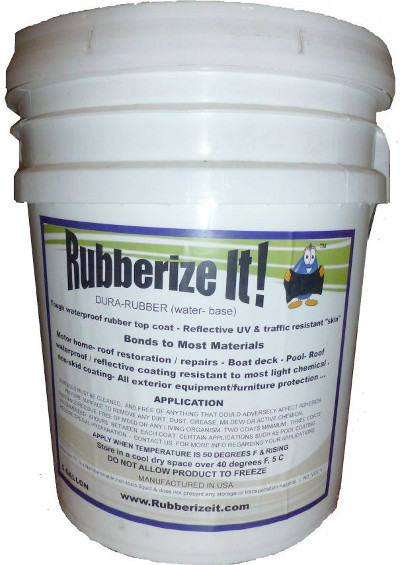
    Rubberize It! Coating Review

    Exactly what it sounds like. Rubber!
    Exactly what it sounds like. Rubber!

    The name gives it away. It’s rubber. Its also a water based 61% solids no VOC protective coating. While initial cost is good, you will require 40% more material than comparable coatings which are 100% solids.
    This product seems to show a lot of promise based on the information that’s found on the website and in some forums like koi-bito, koiphen, etc. There are some excellent reviews on this product that are promoted by people closely related to it.However, upon close investigation it seems that the application process is not so consistent if not using the optional spray system. This increases the price tag quite a bit and makes it not so simple for the DIY consumer.

    View the Pond Coatings Chart


    Online RubberizeIt Reviews

    Good Reviews

    Amazon Review
    This set of reviews show it’s an outstanding product.

    Negative Reviews

    PondForum Review
    This details how multiple aspects of this product are not working as the consumer seems to believe. Pinholes are never a good thing.

    PondForum Review
    This details how multiple aspects of this product are not working as the consumer seems to believe. Pinholes are never a good thing.

    Review on cichlid.com
    Advises against this product for long term waterproofing

    Summary

    Though this product sounds like the ultimate product for waterproofing for just about anything, it seems there are enough nuances to make it “not so easy” to use. Not to say that it doesn’t work. There is obviously a steep learning curve if this product does work for long term protection. This appears to be a product that is good for many uses, but perhaps not cement pond waterproofing.

  • CIM 1000 Pond Coating Review

    CIM 1000 Pond Coating Review

    CIM1000 Review

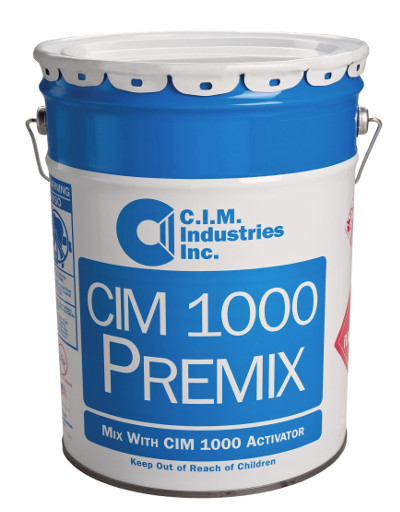
    cim-1000CIM 1000 is a two-component high performance coating and lining that forms a seamless, tough elastomeric membrane. The product CIM1061 is a bit more expensive and was suggested directly from the distributor for use in a koi pond because of its more forgiving nature. This is the product that is used in waste water management facilities.

    This material is highly promoted as a tank liner for potable water. This product costs about $4.50 / sq ft at 60 mils. So, quite expensive, but seems to be a good solution for pond lining and waterproofing applications. If you are applying this on a porous surface you are supposed to use 2x more material making the price tag even heftier.


    View the Pond Coatings Chart


    Benefits

    • Used in industrial applications, so probably can trust long term performance
    • Simple to mix and apply (spray or trowel)
    • Low VOC and 100% solids available

    Draw backs

    • Expensive
    • Bonding agent is very sensitive to use but required in many cases which also adds to cost
    • Not much in DIY applications available
    • Hard to get support
    • Difficult to buy

    Links to CIM 1000 Reviews

    Positive Reviews of CIM 1000

    Review of CIM and other coatings

    This is a pretty comprehensive review of other coatings as well

    Negative Reviews of CIM 1000

    We believe that this product has very little negative feedback because it is a great product. However, it has a hefty price tag that makes it more of an industrial solution.

    Summary

    This product is intended for large jobs that have deep pockets. This asphault based elastomeric coating is great, but the drawbacks make one consider when it comes to DIY projects. At over $4.40 / sq ft, this is a product you do not want to mess up. This should probably be left to the professionals.

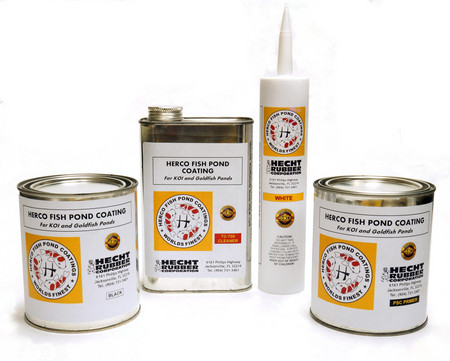
  • Hecht Rubber – Herco Pond Coating Review

    Hecht Rubber – Herco Pond Coating Review

    Sealer, cleaner, rubber and crack repair
    Sealer, cleaner, rubber and crack repair

    Herco Pond Coating is designed to be applied with brush or roller. It is a liquid neoprene rubber, so you would think it should be applied fairly thick. The recommended coating is supposed to be about 30 mils (Hecht claims this will cover 80 sq ft per gallon). That?s physically impossible. 80 sq ft at 30 mils requires 1.5 gallons mathematically. The company has been making and distributing this product since 1945 (based on their website). Having been around for the long, I might expect a larger presence on the web and more reviews.

    The idea of being able to roll a rubber coating that acts as a membrane liner is tempting for many. This would keep you from having to deal with folds and seams which is involved with drop in liners. But, again, with any coating preparation is paramount to success.


    View the Pond Coatings Chart

    Benefits

    • Neoprene Rubber Coating acts like a drop in liner
    • Can adhere to other coatings if they are locked on tight to substrate
    • Adheres to rock, concrete, gunite or any other structural building material
    • Fish Safe

    Drawbacks

    • Should not be applied when rainy
    • Needs a thicker coat than suggested
    • Bubbling seems to be common downfall
    • Customer Service appears to be lacking

    Reviews of Herco Pond Coating

    Good Reviews

    Positive Feedback
    Can?t find many good reviews. Not to say that there are not any.

    Bad Reviews of Herco Pond Coating

    Amazon Reviews of Hecht Rubber
    A few people seem to have problems with bubbling and poor customer service

    Thickness versus coverage area
    This customer had a problem with using the right amount per square foot causing added cost

    Summary

    It sounds like improper prep causes bubbling of the Hecht product. If this is avoided, this product may hold its own as a good pond coating. Long term wear? There are not any real examples that can be found on the web. So, that question goes unanswered. We have reviews of most the top products for DIY Pond Coatings. So, keep reading!

  • Review of Pond Armor Pond Coating

    Review of Pond Armor Pond Coating

    Pond Armor Review

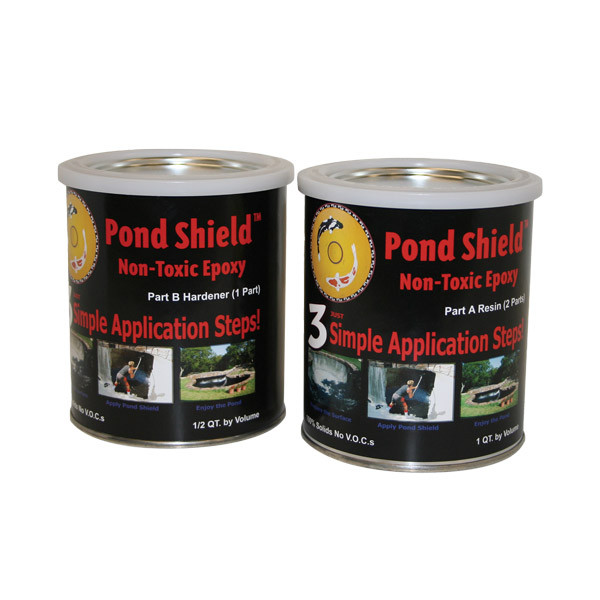
    Pond Shield
    Pond Shield is an epoxy coating for waterproofing ponds

    Pond Armor Pond Shield is a popular product. If you search for “koi pond” or “cement pond coatings” through your web browser, you?ll see that Pond Armor is in many results. The manufacturer has targeted this niche of pond builders looking for good waterproofing solutions. However, with a price tag of over $180 per gallon, this is one of the most expensive products on the market.

    Read about the benefits and drawbacks of this product below

    Or view the Pond Coatings Chart


    Benefits

    • seals cement to eliminate leaching
    • Non Toxic
    • Safe for fish
    • Available at retail outlets

    Draw Backs

    • It only resists hairline fractures (< ? mm in width). There is no information about larger cracks.
    • A lot of negative reviews online
    • Not really a membrane. It dries fairly hard.
    • $70 for 1.5 quarts = almost $186 / gallon

    Following are links to good and bad reviews of Pond Armor Pond Shield. Just remember, sometimes it is the competition providing negative reviews and sometimes it?s the manufacturer submitting positive reviews so take them with a grain of salt.

    Good Reviews

    Koi Bito Review of Pond Armor

    Product is good, and if preparation is done correctly then there is a high rate of success.

    davesgarden.com review of Pond Armor

    Mentioned as a great product for waterproofing.

    Bad Reviews

    http://www.monsterfishkeepers.com/forums/showthread.php?298944-DIY-Plywood-Tank-Built-but-leaks-need-help
    Cracking seams when tank is pushed or stepped into. Indicates low resistance to cracking

    Amazon Customer Reviews of Pond Armor
    Mixed reviews. About 50/50 good/bad. Main points seem to be price, working time and cracking.

    thepondguy.com Pond Armor Review

    A lot of negative statements

    Summary

    Pond Armor seems to be popular and used by many, even though the support (lacking from many reviews) and the price seems non-optimal. However, their rank in Google puts them in a top spot. So, be careful and do your research before purchasing a waterproof coating for your pond/koi project.

  • Waterproof Cement Pond Coating Comparison

    Compare the most important features of the popular waterproof pond coatings on the market. This is helpful to make a clear decision on which product to purchase. Don’t forget to read the objective reviews of these products following this cross reference.

    Product Mil Height Rating Kit Amt Kit Cost $/sq ft
    Adhesion Promoter? Is a Sealer DIY Membrane % Solids Tensile Elongation
    Polyurea Hybrid 60-100 N/A N/A $15.00
    N Y Y N 100% < 2000 psi 50%-300%
    Pond Armor 20-30 1.5 Gallon $319.80 $2.65
    N Y Y N 100% 1100psi 4%
    Hecht Rubber 30 1 gallon $215.00 $4.00
    Y N Y Y 40% 680 psi 180%
    Seal Tite 30-120 1 gallon $139.28 $2.60
    N Y Y Y 100% < 2200 psi 80%
    RubberizeIt! 60-100 5 gallon $345.99 $5.17
    Y N Y Y 40% 89.5 psi 270%
    CIM 1000 60-120 5 gallon $500.00 $3.74
    N N N Y 89% 800 psi 300%

    Defining the Variables

    The following factors are all used in determining the number of stars a product receives. This was based on a few application factors as follows:

    • overall cost
    • ease of use
    • strength of coating
    • Is the coating a membrane?

    Is Sealer

    Some coatings require a sealer PRIOR to application because chemicals can leach out of the substrate and cause delamination and cracking. EPDM/neoprene rubber coatings and some polyurethanes require a separate sealer to keep this from happening. The problem is that these sealer/primers add a significant amount of cost to the product. So, it’s easy to see that coatings that act as a sealer/primer will be more affordable without sacrificing quality.

    Adhesion Promoter

    If you read about rubberized coatings that are used in coating concrete or metal you’ll see that it is highly recommended to use an appropriate adhesion promoter to resist bubbling and peeling after the application. Again this adds significantly to the labor and product cost. So, even though these rubber-type coatings are very attractive, there are drawbacks that make these coatings problematic.

    DIY

    If you are looking to handle a coating job yourself and you are not a contractor, this is an important factor. Polyurea requires expensive equipment as well as proper training and licensing to apply in most areas. That makes DIY impossible.

    Membrane

    The advantage of a membrane coating is that it stretches enough to not crack when the underlying substrate moves, expands or cracks itself (within certain constraints). These types of coatings are superior to others in regards to long term function and performance when strained by environmental factors (freezing, thawing, high water table, etc).

    % solids

    The solids percentage is literally the amount of solids to VOC’s / solvents / water. So, when the chemical reaction that makes a coating harden or cure is complete, there is a loss of volume/weight of materials. Therefore, if you have a gallon of material that is 40% solids, you can calculate the coverage of that material with the formula :

    (Total Liquid (in gallons) * %solids * 1604) / mil height = total sq footage at the mil height

    So, let’s compare a high solvent content coating and a no solvent coating:

    1 gallon of 40% solids @ 30 mils is :
    (1 * .4 * 1604) / 30 = 21.4 sq ft @ 30 mils
    1 gallon of 100% solids @ 30 mils is:
    (1 * 1 * 1604)/30 = 53 sq ft @ 30 mils


    As you can see, this is more than double the coverage rate which significantly decreases the cost / sq ft of a no solids coating to the original price. So, if you want to use money to understand it we can take the cost of the 2 items per gallon and use this formula:

    $200 for one gallon of 40% solids for 30 mils of coatings
    $200 / ((1 * .4 * 1604) / 30) = $ 9.35/ sq ft @ 30 mils
    versus
    $300 for one gallon of 100% solids for 30 mils of coatings
    $300 / ((1 * 1 * 1604) / 30) = $5.61 / sq ft @ 30 mils

    This makes the rubber type solutions here very expensive compared to 100% solids coatings. Seal Tite Membrane Coating?= 100% SOLIDS.

    Tensile Strength

    Tensile strength measures the force required to pull something such as rope, wire, or a structural beam to the point where it breaks. The tensile strength of a material is the maximum amount of tensile stress that it can take before failure, for example breaking. Seal Tite = 3,800 tensile average (range is 2060 to 6,500 PSI dependent on mix ratio)

    Elongation

    Elongation is the measurement of how far a sample of material can be stretched and still return to it’s original form. This can be technically described by :

    “the increase in the gauge-length of a test specimen after fracture divided by its original gauge-length. Higher elongation mean higher ductility.”

    For example :

    specimen length = 1 cm
    specimen length with tension applied breaks at 3 cm
    elongation = 3/1 = 300% elongation. Seal Tite = 218% elongation average with proportionate range as it’s tensile PSI.

  • VOCs – What and Why

    VOCs are carbon based molecules that create ground level ozone (tropospheric ozone) when exposed to sunlight

    The US Government (and world govs) have decided to regulate these materials due to long term side effects of overuse.

    VOCs are heavily used in coatings because they allow a coating that has been spread out to dry quickly

    There are no VOC’s in a majority of our coatings

    Get a Safe Superior Coating that seals and creates a protective waterproof membrane without the harmful effects of VOC’s

    Here is a list of the current VOCs based on EPA and US Government

    Compound CAS# MW   USEPA TO-15   NJDEP LLTO-15
      Target List RL (ppbv) RL (ug/m3)   Target List RL (ppbv) RL (ug/m3)
       
    Acetone 67-64-1 58.08   X 0.5 1.2   X 0.5 1.2
    Acetonitrile 75-05-8 41.00   X 0.5 0.8        
    Acrylonitrile 107-13-1 53.00   X 0.5 1.1        
    3-Chloropropene (Allyl chloride) 107-05-1 76.53   X 0.5 1.6   X 0.2 0.6
    Benzene 71-43-2 78.11   X 0.5 1.6   X 0.2 0.6
    Benzyl chloride 100-44-7 126.0   X 0.5 2.6        
    Bromodichloromethane 75-27-4 163.8   X 0.5 3.3   X 0.2 1.3
    Bromoethane (Ethyl bromide) 74-96-4 108.0   X 0.5 2.2        
    Bromoform 75-25-2 252.8   X 0.5 5.2   X 0.2 2.1
    Bromomethane 74-83-9 94.94   X 0.5 1.9   X 0.2 0.8
    1,3-Butadiene 106-99-0 54.09   X 0.5 1.1   X 0.2 0.4
    n-Butane 106-97-8 58.12   X 0.5 1.2   X 0.2 0.5
    Chlorobenzene 108-90-7 112.6   X 0.5 2.3   X 0.2 0.9
    Chloroethane 75-00-3 64.52   X 0.5 1.3   X 0.2 0.5
    Chloroform 67-66-3 119.4   X 0.5 2.4   X 0.2 1.0
    Chloromethane 74-87-3 50.49   X 0.5 1.0   X 0.2 0.4
    Carbon disulfide 75-15-0 76.14   X 0.5 1.6   X 0.2 0.6
    Carbon tetrachloride 56-23-5 153.8   X 0.5 3.1   X 0.2 1.3
    2-Chlorotoluene 95-49-8 126.6   X 0.5 2.6   X 0.2 1.0
    Cyclohexane 110-82-7 84.16   X 0.5 1.7   X 0.2 0.7
    Dibromochloromethane 124-48-1 208.3   X 0.5 4.3   X 0.2 1.7
    1,2-Dibromoethane 106-93-4 187.8   X 0.5 3.8   X 0.2 1.5
    1,2-Dichlorobenzene 95-50-1 147.0   X 0.5 3.0   X 0.2 1.2
    1,3-Dichlorobenzene 541-73-1 147.0   X 0.5 3.0   X 0.2 1.2
    1,4-Dichlorobenzene 106-46-7 147.0   X 0.5 3.0   X 0.2 1.2
    Freon 12 (Dichlorodifluoromethane) 75-71-8 120.9   X 0.5 2.5   X 0.2 1.0
    1,1-Dichloroethane 75-34-3 98.96   X 0.5 2.0   X 0.2 0.8
    1,2-Dichloroethane 107-06-2 98.96   X 0.5 2.0   X 0.2 0.8
    1,1-Dichloroethene 75-35-4 96.94   X 0.5 2.0   X 0.2 0.8
    1,2-Dichloroethene (cis) 156-59-2 96.94   X 0.5 2.0   X 0.2 0.8
    1,2-Dichloroethene (trans) 156-60-65 96.94   X 0.5 2.0   X 0.2 0.8
    1,2-Dichloropropane 78-87-5 113.0   X 0.5 2.3   X 0.2 0.9
    1,3-Dichloropropene (cis) 542-75-6 111.0   X 0.5 2.3   X 0.2 0.9
    1,3-Dichloropropene (trans) 10061-02-6 111.0   X 0.5 2.3   X 0.2 0.9
    Freon 114 (1,2-Dichlorotetrafluoroethane) 76-14-2 170.9   X 0.5 3.5   X 0.2 1.4
    1,4-Dioxane 123-91-1 88.12   X 0.5 1.8   X 0.5 1.8
    Ethyl acetate 141-78-6 88.10   X 0.5 1.8        
    Ethanol 64-17-5 46.07   X 0.5 0.9   X 0.5 0.9
    Ethylbenzene 100-41-4 106.2   X 0.5 2.2   X 0.2 0.9
    4-Ethyltoluene 622-96-8 120.2   X 0.5 2.5   X 0.2 1.0
    n-Heptane 142-82-5 100.2   X 0.5 2.0   X 0.2 0.8
    Hexachloro-1,3-butadiene 87-68-3 260.8   X 0.5 5.3   X 0.2 2.1
    n-Hexane 110-54-3 86.17   X 0.5 1.8   X 0.2 0.7
    Isopropyl alcohol (2-Propanol) 67-30-0 60.10   X 0.5 1.2   X 0.2 0.5
    Isopropylbenzene (Cumene) 98-82-8 120.19   X 0.5 2.5        
    Methylene chloride 75-09-2 84.94   X 0.5 1.7   X 0.2 0.7
    2-Hexanone (MBK) 591-78-6 100.1   X 0.5 2.0        
    2-Butanone (MEK) 78-93-3 72.10   X 0.5 1.5   X 0.2 0.6
    4-Methyl-2-pentanone (MIBK) 108-10-1 100.2   X 0.5 2.0   X 0.2 0.8
    Methyl methacrylate 80-62-6 100.12   X 0.5 2.0   X 0.2 0.8
    Methyl-tert-butyl ether (MTBE) 1634-04-4 88.15   X 0.5 1.8   X 0.2 0.7
    Naphthalene 91-20-3 128.17   X 0.5 2.6        
    Propylene 115-07-1 58.08   X 1 2.4        
    Styrene 100-42-5 104.1   X 0.5 2.1   X 0.2 0.9
    Tertiary butyl alcohol (TBA) 75-65-0 74.12   X 0.5 1.5   X 0.2 0.6
    1,1,2,2-Tetrachloroethane 79-34-5 167.9   X 0.5 3.4   X 0.2 1.4
    Tetrachloroethene 127-18-4 165.8   X 0.5 3.4   X 0.2 1.4
    Tetrahydrofuran 109-99-9 72.11   X 0.5 1.5   X 0.2 0.6
    Toluene 108-88-3 92.14   X 0.5 1.9   X 0.2 0.8
    1,2,4-Trichlorobenzene 120-82-1 181.5   X 0.5 3.7   X 0.2 1.5
    1,1,1-Trichloroethane 71-55-6 133.4   X 0.5 2.7   X 0.2 1.1
    1,1,2-Trichloroethane 79-00-5 133.4   X 0.5 2.7   X 0.2 1.1
    Trichloroethene 79-01-6 131.4   X 0.5 2.7   X 0.2 1.1
    Freon 11 (Trichlorofluoromethane) 75-69-4 137.4   X 0.5 2.8   X 0.2 1.1
    Freon 113 (1,1,2-Trichloro-1,1,2-trifluoroethane) 76-13-1 187.4   X 0.5 3.8   X 0.2 1.5
    1,2,4-Trimethylbenzene 95-63-6 120.2   X 0.5 2.5   X 0.2 1.0
    1,3,5-Trimethylbenzene 108-67-8 120.2   X 0.5 2.5   X 0.2 1.0
    2,2,4-Trimethylpentane (Isooctane) 540-81-1 114.2   X 0.5 2.3   X 0.2 0.9
    Vinyl acetate 108-05-4 86.00   X 0.5 1.8        
    Bromoethene (Vinyl bromide) 593-60-2 106.9   X 0.5 2.2   X 0.2 0.9
    Vinyl chloride 75-01-4 62.50   X 0.5 1.3   X 0.2 0.5
    Xylene (para & meta) 1330-20-7 106.2   X 1.0 4.3   X 0.4 1.7
    Xylene (ortho) 95-47-6 106.2   X 0.5 2.2   X 0.2 0.9
            74 TO-15 Targets   64 LLTO-15 Targets
  • Concrete Ponds – Curing, Sealing and Treatment

    Concrete as a Building Material for Ponds

    It is important that concrete material used in construction of water systems of any sort is able to cure properly for the type of application or be prepared for a waterproof coating. Aside from increasing strength the cure process also allows for the removal of Lyme when done a certain way.

    If the pond is filled with water, leeching will occur naturally and the Lyme will be removed each time you empty the water until there are insignificant amount (refer to ?the long way? below). The other way to remove Lyme is to acid etch the surface after 7 days of moisture curing.

    Leeching side effects

    Water gardens with concrete that has not cured properly can have extremely alkaline water which will negatively affect certain water animals and fauna. Therefore, make sure any cement/gunite structure cures properly PRIOR to application of any liner or coating, especially if you plan on having fish/turtles/koi etc.

    The leeching process can have an effect on the ability of a coating to adhere to a surface. Meaning, a coating could delaminate from the surface concrete because of the chemicals leeching from the concrete causing separation of the coating from the substrate.

    How to cure concrete for a pond

    If the pond is to be used for koi specifically you will want to go the long way and NEVER take a short cut?

    For the long way, you need:

    • Plastic sheeting enough to cover your pond surface with overlap
    • 2 x 4 boards
    • pH test kit

    Place the 2 x 4?s over the pond evenly about 18? apart. Cover the pond entirely with plastic sheeting and place weight on edges. Fill pond to top and let sit for 1 week. Drain and fill again. Let it sit for 2 weeks. Drain and fill again. Let it sit for 3 weeks. Drain and fill again. Let water sit for one week. Drain, fill and test pH. pH should be tested multiple times and remain between 5.8 and 6.8 pH for the next two weeks.

    Do you have to cure concrete when using a sealer?

    Yes, you do not want to rush the curing process. The strength of the concrete is compromised. Moist curing is recommended when using a penetrating sealer. Moist curing allows the concrete to cure at ultimately a lower temperature which is important because the slower the cure, the stronger the concrete.


    Our pond coating system and support is unrivaled in the pond coating market. Elastic, impermeable underwater coating for any water retaining application.

    Professional Product for Home Use – Fish and Plant Safe


    Best Materials to Use for Different Ponds

    Water Gardens

    Water gardens will ultimately have life in them. Whether you put it there or not, any healthy water source will support life of some sort. Whether it?s some water plants that are brought in by way of migration, or frogs finding your habitat ideal for laying eggs, you will have life.

    These ponds can be < 4? deep and optimally between 1? and 3? deep. Therefore, EPDM liners are a better solution for non-koi ponds.

    However, EPDM liners are not permanent structures. If you have a great stake in your property and know what you want, you may want to think about using a permanent solution like concrete. In addition, a concrete pond can increase the value of your home. Just make sure that permitting practices are followed.

    Koi ponds

    Since the depth requirement is greater creating a need for a much larger liner and possibly breaking the constraints that liners work well within, concrete/gunite + polyurea solution is the optimal solution for koi ponds. In earthquake prone areas, EPDM or geotextile + polyurea solution is suggested.

    However, there is still a need for a structural component with geotextile + polyurea in certain conditions or building designs. Geotextile + polyurea itself does not maintain rigidity when unexpected pressure is applied to the surface. This is why any pond that is deep or has vertical surfaces to be coated is suggested to be constructed from concrete + polyurea .

    Concrete + polyurea creates an extremely durable and tough system that can undergo extreme conditions without endangering the integrity of the surface.
  • Your Koi Pond – 5 Great Design Ideas

    Koi Pond Design

    What a great idea. A pond in the backyard with fauna and viewing areas built in. It’s a great way to turn your land into a rewarding peaceful place to get some personal time and think. Just like any task, it comes down to materials, land, future goals and ability to do maintenance on your property.

    Great Design Ideas Require Great Work

    At the end of the day you are either going to be able to handle some, all or none of the work for yourself. You make decisions of design based on a few things: your desires, your budget, your physical constraints. You must be willing to pay for things you really cannot do and NOT GET STUCK.


    View our Koi Pond Kits and Product Information


    Check out these great ideas for designing and building your koi pond (doesn’t have to be koi specifically, but it’s a good example)

    Koi Pond Basic – Specifications

    pond-schema
    A koi pond must be properly designed in order to allow whatever species you have living in your pond to thrive. In this case Koi Fish are the topic. Here are some basic guidelines for creating the necessary environment.

    • 3+ feet deep
    • 25 sq. ft. of pond per koi
    • No less than 1,000 gallons of water

    Koi fish need shade. If you’re pond is in the direct sunlight you need to grow some kind of water plants that provide reasonable shade throughout 15%-30% of the pond surface area. Regardless, you need some sort of plant life to provide food and a healthy ecosystem for your pond.

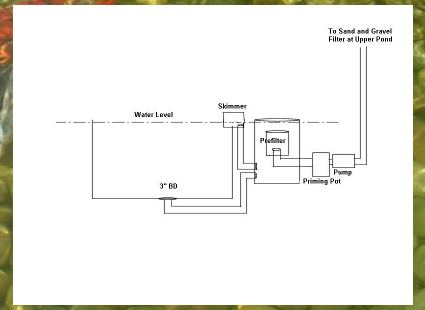
    Good filtration is a necessity to handle organic waste produced by the system that cannot be consumed by the environment. Spray Koi Pond Coatings instead of rolls of liner are very beneficial because you can install a bottom drain easily in this scenario.

    Aeration is necessary to provide appropriate oxygen levels to the pond for your koi and other animals in the system. If you live in a hot climate or have large fish, proper aeration is crucial and can be accomplished with jets, waterfalls, and shallow streams.

    Water quality is the last component that cannot be overlooked in the design phase of your koi pond. Optimal ph and water temperature are the two main factors determining water quality. A temp between 39 F and 68 F is ideal along with a ph balance between 7.0 and 7.8

    Koi Pond Design – Visualizing

    This is where your yard becomes a canvas. Many people may decide to bring in a landscape architect to help perfect the physical presentation of the koi pond and the surrounding plants and ground. With a spray coating for a koi pond the ideas are limitless. You don’t need to line the pond with heavy rocks or debris to try and hold down a plastic liner or protect the edge of the liner. You are also able to design absolutely any shape you want unlike traditional ponds where you are limited to round, oblong, or kidney shaped. This is a big plus, especially in small areas where you may want small veins throughout the area or have bottom structure that makes for an odd shaped floor.
    If you do not have the dimensional thinking and understanding of plants that co-exist well, than a consultant might be right for you.
    If you do have the ability, you might want to take a look at some of these resources for layout ideas:
    Backyard Design | Koi Pond Shapes

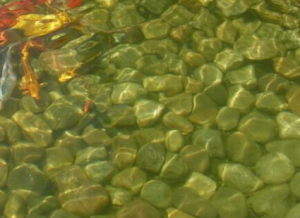
    Do NOT USE SMALL ROCKS in your Pond

    algae-rock
    This is a big no no. The maintenance is a nightmare. If you decide to do this, you will have to clean out the pond rock every year and clean thoroughly. If you don’t, small pockets of hydrogen will form under and between the rocks. If one of this pockets bursts, you will have a koi grave instead of a koi pond.

    Move your water!

    If you want to keep proper oxygen levels and keep algae from forming in uncontrollable levels, get a waterfall or a river. Waterfalls are an awesome addition to a koi pond because they really add depth to the area you are working with. They make a little area look much bigger. They create plenty of oxygen for your environment. Lighting up a waterfall at night is ridiculous! You will probably enjoy that addition for decades to follow

    Spray Coat Your Koi Pond

    Spray polyurea and polyurea hybrids are becoming very available and with significant advantages over concrete and traditional pond liners.

    • Concrete is very expensive in regards to labor and time to complete.
    • Traditional liners are cheaper, but they come at a price. These systems typically only last a few years which ends up costing you double the time and effort to just do a spray koi pond kit. In fact the original installation is easier because you do not have to mess around with bulky liners and seams. Instead you simply spray the area to the proper build, let it cure and … well, that’s it. This is also a LOT easier than trying to use concrete. There is no way you are going to do concrete DIY unless you are a mason by trade.

    View our Koi Pond Kits